

GDPR Guidelines for Email Marketing
Understand GDPR guidelines for email marketing compliance. Ensure legal and ethical email practices!

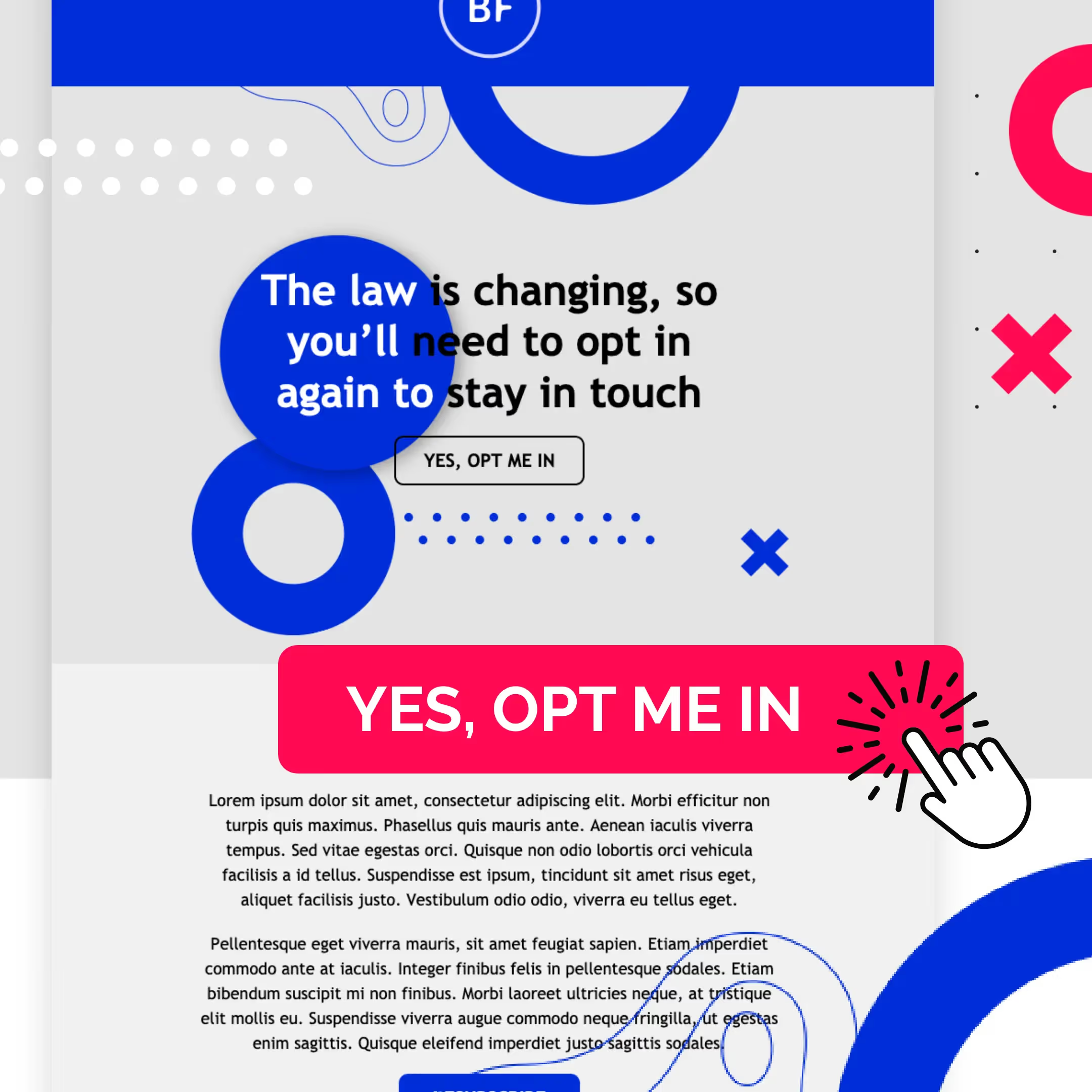
In order to do email marketing, you have to collect a lot of personal data from your customers. It's your responsibility to keep that data private and safe, and that's where the GDPR comes in. As an email marketer, it's essential to double check that your business is complying with GDPR email marketing best practices.
What is the GDPR?
The GDPR, or General Data Protection Regulation, is a set of rules for marketers that aims to protect consumer data. These regulations went into effect on May 25, 2018, and apply to all businesses and online consumers located in the EU. Under the GDPR, businesses need to take extra steps to ensure they're protecting their customers' personal data and keeping it private. Keeping track of this data is your responsibility, not the responsibility of your email service provider, and businesses that breach the GDPR may have to pay a hefty fine.
How does the GDPR affect email marketing?
GDPR email marketing is all about receiving consent. As an email marketer, you need to obtain your customers' explicit and freely given consent before sending them any promotional emails. When someone new signs up for your email list, they need to be well-informed about what they're going to receive from you and what you're going to do with their personal data. It's also important to analyze your current email list and make sure you have proof of consent for every subscriber, including a record of how, when, and why they got on your list. According to the GDPR, if you don't keep a record of consent, the consent itself is not valid, and you'll need to send a re-engagement email to ask for consent again if you can't prove it.
GDPR email marketing best practices
Get permission
GDPR email marketing starts before you ever send a marketing email. The first step is getting informed consent from subscribers, meaning your customers need to understand what they're signing up for and how you're going to use their data.
Use a double opt-in
Many businesses decide to use a double opt-in to get consent from users. While it isn't mandated under the GDPR, it can still be a good way to make sure you're doing everything by the book. With a single opt-in, a user fills out a form and gives consent, and that's it. With a double opt-in, users fill out your website form, receive an email double-checking that they want to sign up, and then give final consent through that email. If you send several different types of content, you'll need to get separate permission for each one, using individual checkboxes rather than bundling everything together for one-click consent, which violates the GDPR.
Add a visible unsubscribe link
After you obtain consent, your job isn't done. Every email you send needs to have a clearly visible link where the reader can opt out. Your unsubscribe link should let readers unsubscribe from all of your communication, not just one type, and when someone requests to be unsubscribed, honor their request immediately. It's also a best practice to give customers access to your privacy policy in your emails, not just on your opt-in form.
Be honest
One final component of GDPR email marketing is to make sure all of your marketing communications are honest. Be transparent about who's sending the email, include your company's address to identify yourself, and don't send any fraudulent content.
Wrap-up
Follow these key GDPR email marketing best practices to make sure your business is doing everything by the book!
Articles to wet your whistle





Subscribe to our newsletter.
Dive into the world of unmatched copywriting mastery, handpicked articles, and insider tips & tricks that elevate your writing game. Subscribe now for your weekly dose of inspiration and expertise.